Ordering a Wedding Dress From Vietnam: The Honest Guide
Timelines, deposits, scams and shipping, answered with numbers from brides who actually did it, by a bridal shop in Ho Chi Minh City that is part of the trade they are nervous about.
Search for this and the first result is not a bridal shop. It is a forum thread, where brides ask each other whether a shop in Vietnam is real, and mostly do not get an answer.

We make and sell wedding dresses at 106-108 Đường 3 Tháng 2 in Ho Chi Minh City. We are one of the shops those brides are nervous about. So this article answers the questions in those threads with numbers, including the ones that do not flatter us.
The bride reports quoted here are gathered from public forums. They are not our customers and we have not edited what they said into something kinder.
1. The real question is not price, it is whether you will be scammed
Read enough of these threads and the pattern is unmistakable. The money question comes second. The first one is always some version of: is this shop real, and will a dress actually arrive.
Brides are reverse image searching the photographs shops send them. One found that the photo of a gown supposedly made for her was all over the internet. On the main bridal forums there is now standing advice to run that check before paying anyone.


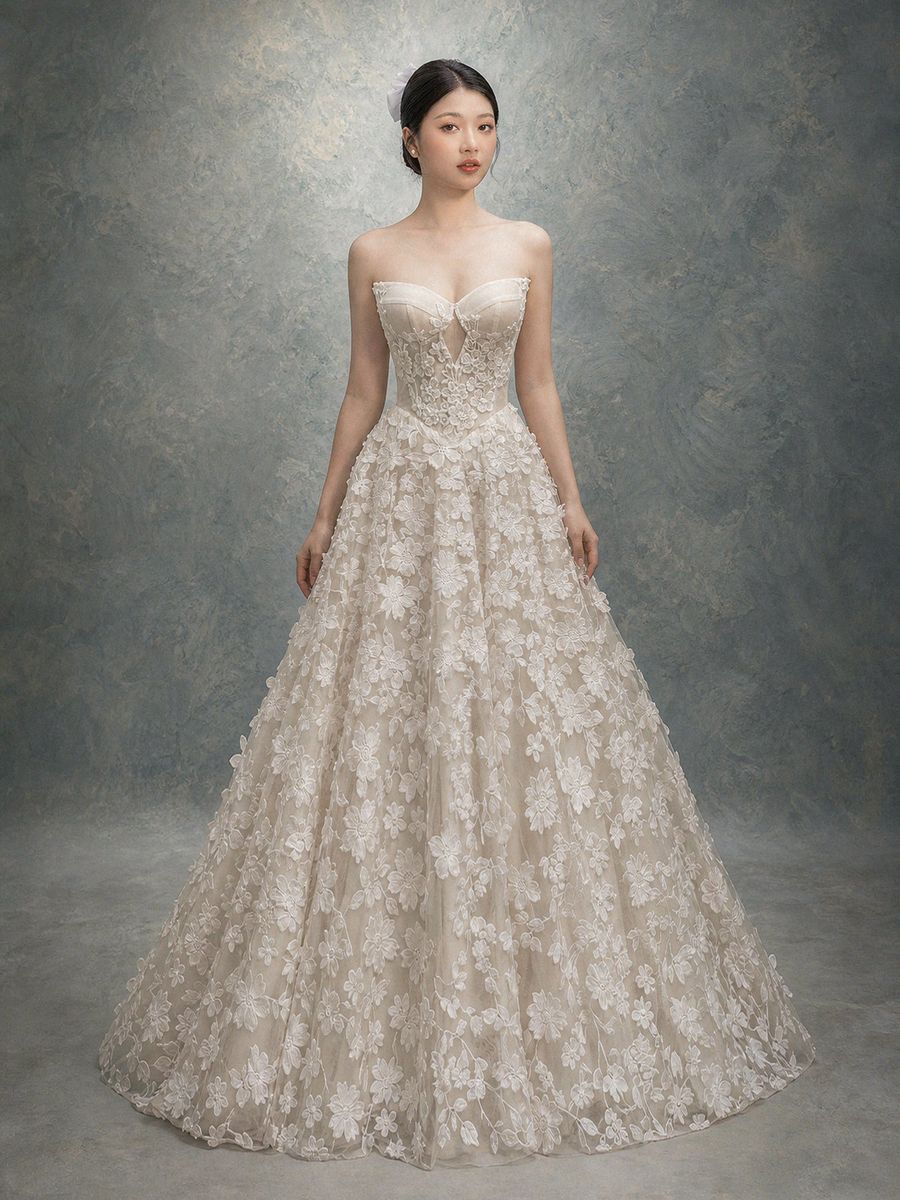
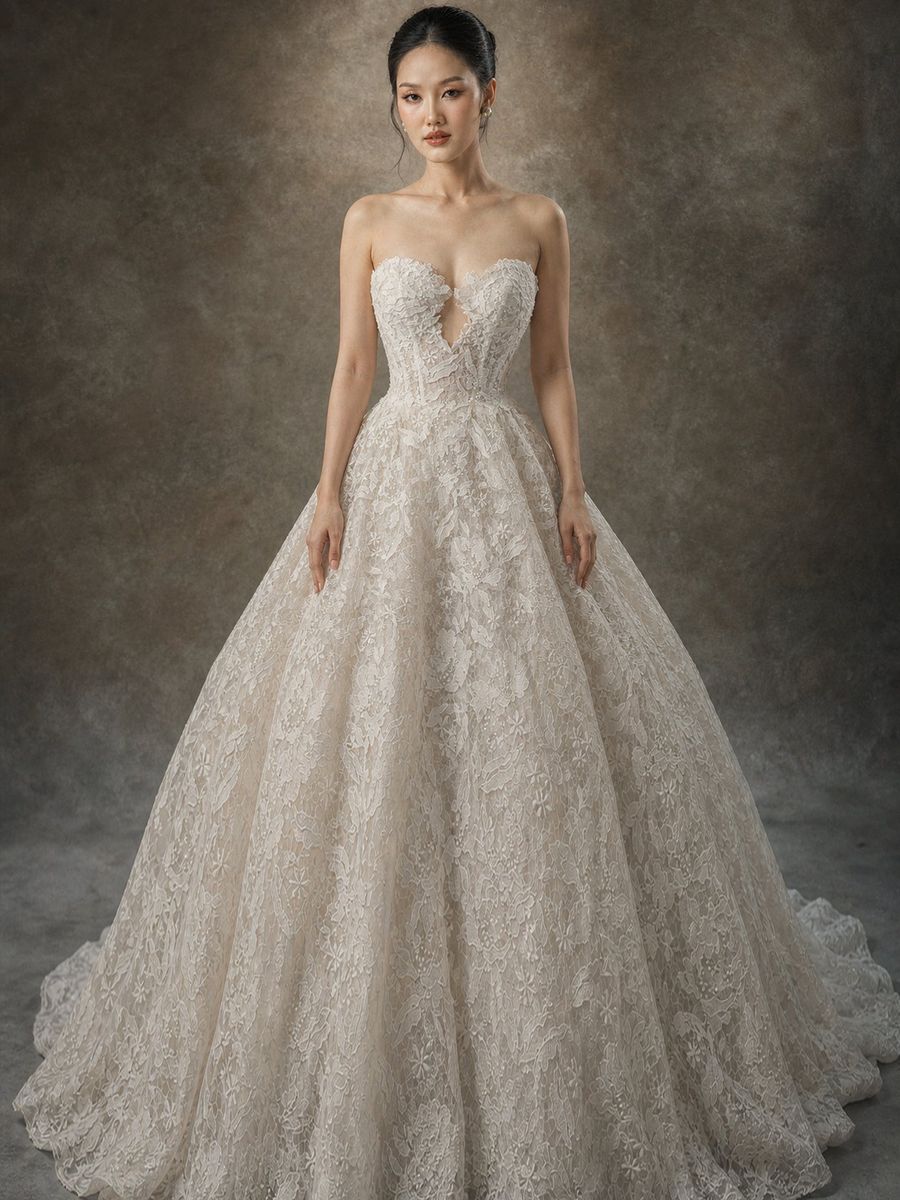
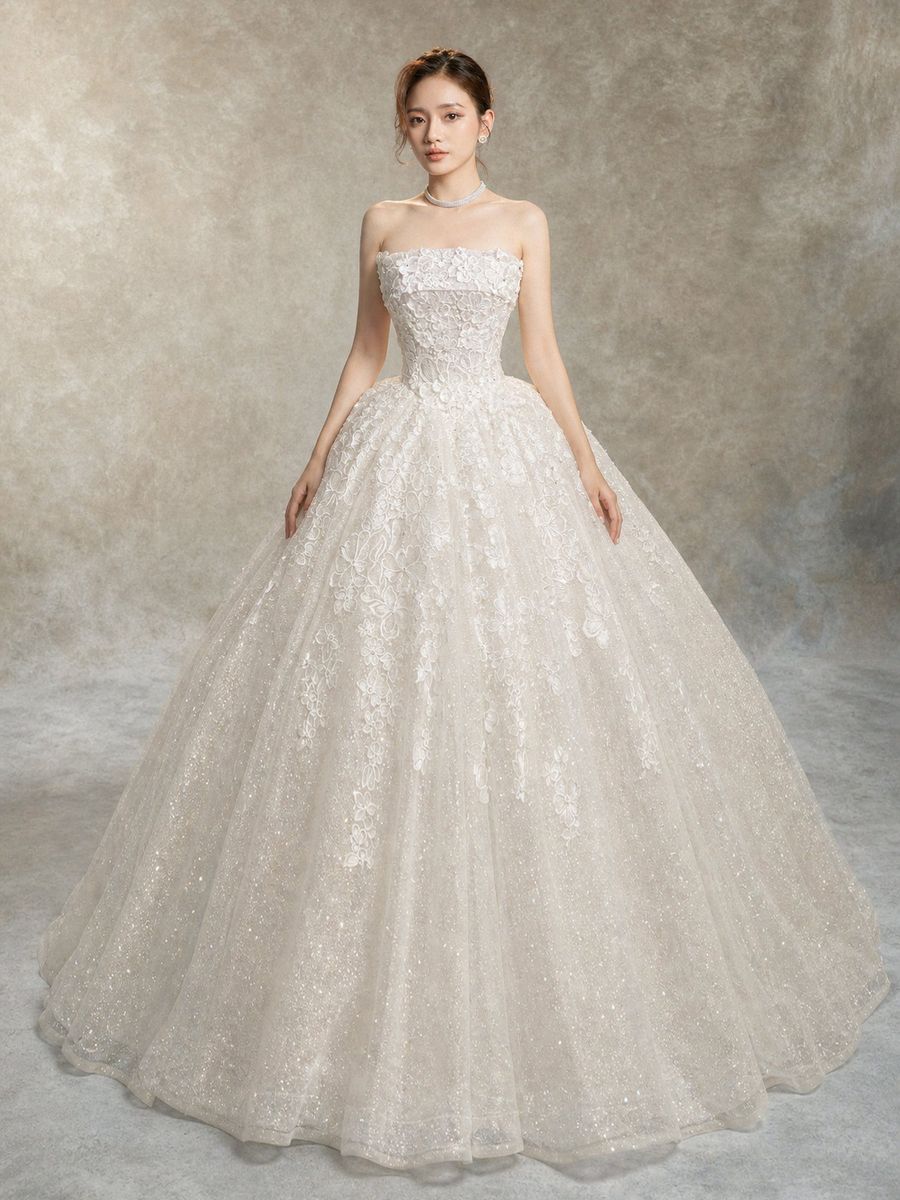
So do it to us too. Every photograph on this site is of a gown physically on our rail, photographed in our showroom. If one of ours turns up elsewhere on the internet, it is because someone took ours.
The second trust break is more specific and more serious: no contract. Brides describe transferring five hundred to a thousand dollars with nothing in writing. The ones who did get a contract mention it afterwards as the proof the shop was professional. Ask for one. A shop that cannot produce a written order with the price, the spec and the dates is not a shop you should be wiring money to.
2. There is now a market in simply being trusted
This is the detail that says the most about the state of this trade. There are people in Vietnam who will charge a foreign bride three to four hundred and fifty dollars to go to a shop on her behalf — on a gown that costs around a thousand.
That is a fee of up to forty-five per cent, paid purely for reassurance. It exists because the shops themselves have not made themselves checkable. Nobody should have to pay that.
There is a second fee you may not know about. Hotels, drivers and guides in Vietnam are commonly paid a commission of thirty to thirty-five per cent for walking a tourist through a shop door. Brides have worked this out and now warn each other. We pay commission to nobody. If someone recommends us, it is not because we bought the recommendation.


3. How long it actually takes
Brides ask this constantly and get a different answer every time, because every shop answers for itself and none of them publish a range. Here is the spread from brides who reported both halves of the timeline.
| Production, fastest reported | About two to three weeks, for a design already patterned |
| Production, typical | Two to four months |
| Production, slowest reported | Six months, and some of those arrived late |
| Shipping, fastest reported | Around four days to the United States |
| Shipping, typical | One to four weeks |
| Shipping cost, reported | Roughly one hundred to three hundred dollars |
The honest planning rule that comes out of those numbers: it can be done in about eight weeks, and you should not plan it that way. Start six months out and you absorb one remake and one shipping delay without losing sleep.
One more thing the threads make plain. The brides who were let down were almost never let down by the sewing. They were let down by a date that moved, and by finding out late.


4. Deposits, and the rule brides invented for themselves
Reported deposits run from around five hundred dollars to sixty per cent of the gown, and sixty per cent before any work begins is common enough that brides treat it as normal.
They have worked out two self-defence rules between them, and both are good ones:
| Keep the deposit low | Thirty per cent is enough to commit a shop to cutting fabric |
| Stay until it fits | If you are in Vietnam, do not fly home before the final fitting |
The reason those rules exist is the thing every failure story has in common. By the time the problem is visible, the money is gone and the bride has left the country. Nothing about the situation is reversible. Everything else — the fabric, the beading, the delivery date — is negotiable right up until that point.
5. What it actually costs, and why
A gown that costs three thousand dollars in a salon at home is not three thousand dollars of fabric and labour. It is a sample you tried on, a shop lease, a stylist's commission, a designer's margin and a distributor's margin. Ordering direct removes four of those layers. The lace is the same lace.
To put a real number on it: of the 330 gowns on our rail today, 322 are under a thousand dollars. The cheapest is $65 and the most expensive is $1,535. Those are the prices on the site, visible before you speak to anyone.


Brides also compare notes across cities, and the comparison is not kind to Saigon. One was quoted thirteen hundred dollars here for a gown another bride bought in Da Nang for five hundred and fifty. Another was quoted seventeen hundred, then fifteen hundred in the same conversation, for her. Brides now tell each other to haggle.
We will not defend any of that. We will only say what we do instead: the price is published first, and nobody here is authorised to change it because you are foreign or because you asked twice. There is nothing to haggle down from.
6. Measurements, which is where it really goes wrong
Almost every remote fitting disaster traces back to numbers taken badly at home. A waist measured at the jeans line instead of the natural waist. A hollow to hem taken barefoot by a bride who will wear nine-centimetre heels. The gown is then made correctly to the wrong information.
| Have someone else hold the tape | Self-measuring the waist is reliably two to four cm out |
| Natural waist, not the jeans line | The narrowest point, usually above where trousers sit |
| Wear the bra you will wear | Bust changes shape more than brides expect |
| Hollow to hem in your shoes | Say the heel height in writing |
| Send your upper arm | Nobody asks, and it decides whether sleeves work |
| Do not diet into a number | Send today's measurements, not the goal |
Each of those numbers controls a specific decision on the gown, and we have written up all ten, including the two nobody explains, in how to measure for a wedding dress.
The practice worth insisting on is a video call while you measure. The brides who got one describe it afterwards as the thing that saved the gown. It costs the shop twenty minutes and removes the single biggest failure mode in the whole process. If a shop will not do it, that tells you something.


7. Getting it home
Shipping and customs is the question brides ask most often and get answered least. It is also the one where the numbers are wildest: one bride paid ten dollars of duty on a parcel of two gowns into the United States, another was billed over a thousand pounds into the UK. The difference was paperwork, not the dress.
If you are in Vietnam anyway, the cheapest and fastest route home is a garment bag as hand luggage. It skips the entire customs process.
The full duty and shipping guide
8. The questions to ask before you pay anyone
Ask these of us and of every shop you are talking to. The answers, not the photographs, are what separates them.
| Can I see the actual fabric before you cut | A real shop sends swatches or a photo of the bolt |
| Can I see the finished gown on film before the balance | If not, you are paying blind |
| Who is the tailor, and can I video call the floor | Vagueness here is the loudest signal there is |
| Will you put the price, spec and dates in writing | No contract, no deposit |
| What is your remake policy if it does not fit | It should exist and be stated before you pay |
| How many times has this gown been worn | Only a shop with nothing to hide answers straight |
One more, and it is new. If the replies read like a chatbot, treat it as a warning. Brides have started noticing shops answering with sympathy about their feelings instead of answers about fabric, and they read it, correctly, as nobody being there.
9. Frequently asked questions
Is ordering a wedding dress from Vietnam safe
It is as safe as the shop, and the shop is checkable. Reverse image search their photographs, insist on a written order, keep the deposit to about thirty per cent, and require a video call before the balance is paid.
How much does a wedding dress from Vietnam cost
Reports from brides cluster between five hundred and eighteen hundred dollars. On our own rail today, 322 of 330 gowns are under a thousand dollars, from $65 to $1,535.
How long does it take
Two to four months is typical for production, plus one to four weeks shipping. It can be done in eight weeks. Plan on six months.
What deposit should I pay
Thirty per cent is enough. Sixty per cent is commonly asked for and you are allowed to negotiate it down. Never pay in full before the gown exists.
Do I have to fly to Vietnam
No. Most of the brides in these threads ordered remotely. If you do come, stay until the final fitting is done rather than collecting on the last day.
What about customs and import duty
It depends on your country and on how the paperwork is filled in, which is why the reported amounts differ by a factor of a hundred. We have written the whole thing up separately.
Will the dress need alterations at home
Usually something small, a hem or a bust adjustment. Budget for it. Anyone promising none is selling.
What if I am not a Vietnamese size
Then say so in the first message. Rack samples here run small and sleeves are the usual problem. A gown can be made to your measurements instead.
The short version
The thread is still the top result because no shop has answered it. The answers are: two to four months, thirty per cent deposit, a written order, a video call while you measure, and a reverse image search before any of it. Ask those five things of everyone, including us.
Thinking about a made-to-order gown?
Start with a video fitting. No deposit, no obligation, from anywhere in the world.
Book a fitting